Interest in psychedelic substances has grown considerably as researchers continue to investigate how compounds such as psilocybin interact with the human brain. This renewed attention has also created confusion around two terms that are frequently used interchangeably: magic mushrooms and psilocybin.
When comparing Magic Mushrooms vs Psilocybin, the most important distinction is surprisingly simple. Magic mushrooms are fungi that naturally contain psychoactive compounds, while psilocybin is one of the primary compounds responsible for their psychedelic effects.
Although closely connected, they are not exactly the same thing. Their composition, consistency, research applications, and effects can differ significantly.
This guide explores Magic Mushrooms vs Psilocybin, including how they work, their effects, potential benefits being studied, important differences, and factors people should understand when learning about psychedelics.
What Are Magic Mushrooms?
Magic mushrooms are species of fungi that naturally contain psilocybin and related psychoactive compounds. They are sometimes called psychedelic mushrooms or psilocybin mushrooms.
More than 100 mushroom species have been identified as containing psilocybin, although their concentrations can vary considerably depending on species, genetics, cultivation conditions, maturity, storage, and other factors.
One of the most widely recognized species is Psilocybe cubensis. Other species may contain different concentrations and combinations of psilocybin, psilocin, and additional naturally occurring compounds.
This variability is an important part of the Magic Mushrooms vs Psilocybin discussion. A mushroom is a complex biological organism containing numerous substances, whereas purified or synthesized psilocybin refers to a specific chemical compound.
What Is Psilocybin?
Psilocybin is a naturally occurring psychedelic compound found in certain mushroom species.
After entering the body, psilocybin is converted into psilocin, the compound largely responsible for its psychoactive effects. Psilocin interacts primarily with serotonin receptors in the brain, particularly the 5-HT2A receptor.
These interactions can temporarily alter perception, mood, sensory processing, cognition, and a person’s sense of time and self.
Scientists studying psychedelics frequently use measured doses of synthesized or purified psilocybin rather than whole mushrooms. This allows researchers to control dosage more precisely and makes experimental results easier to compare.
That distinction becomes particularly important when examining scientific research surrounding Magic Mushrooms vs Psilocybin.
Magic Mushrooms vs Psilocybin: What Is the Main Difference?
The simplest way to understand the difference is to think of the mushroom as the natural source and psilocybin as one of its active ingredients.
Magic mushrooms contain psilocybin alongside psilocin and numerous other naturally occurring compounds. Their chemical concentrations can vary from one mushroom or batch to another.
Purified psilocybin, by comparison, can be measured with much greater precision.
This difference in consistency explains why clinical studies generally focus on standardized psilocybin rather than dried mushrooms. Researchers need carefully controlled doses to evaluate effects and potential therapeutic applications.
In everyday conversation, however, people sometimes use “psilocybin” as shorthand for psychedelic mushrooms, which can create confusion between the compound and the organism containing it.
 How Do Magic Mushrooms and Psilocybin Affect the Brain?
 How Do Magic Mushrooms and Psilocybin Affect the Brain?
Once consumed, psilocybin is rapidly converted into psilocin. Psilocin then interacts with serotonin receptors throughout the brain.
Serotonin is involved in numerous processes, including mood, perception, cognition, and sleep. Psychedelic effects are especially associated with activity at serotonin 5-HT2A receptors.
Researchers using modern brain-imaging techniques have investigated how psychedelics temporarily change communication between different brain networks.
These changes may contribute to commonly reported psychedelic experiences such as intensified sensory perception, altered thinking patterns, changes in emotional processing, and a different sense of self or surroundings.
Research into these mechanisms remains active, and scientists are still working to understand exactly how temporary neurological changes relate to longer-lasting psychological effects reported in some controlled studies.
Magic Mushrooms vs Psilocybin: Comparing the Effects
Because psilocybin is one of the principal psychoactive compounds in magic mushrooms, there is considerable overlap between their effects.
Possible psychedelic effects can include changes in visual perception, intensified colors or patterns, altered time perception, emotional shifts, unusual thought patterns, and changes in how a person experiences their surroundings.
Some people describe positive experiences involving feelings of connectedness, introspection, wonder, or emotional openness.
However, psychedelic experiences can also be difficult or distressing. Anxiety, confusion, fear, nausea, disorientation, or panic can occur.
Individual responses vary considerably and may depend on dose, psychological state, environment, expectations, other substances, medications, and personal health factors.
The major difference with whole mushrooms is predictability. Natural mushrooms can vary substantially in potency, while standardized psilocybin used in research can be precisely measured.
Potential Benefits Being Studied
One major reason Magic Mushrooms vs Psilocybin has become a popular topic is the rapid expansion of psychedelic research.
Researchers have investigated psilocybin in controlled settings for several potential applications, including depression, anxiety associated with serious illness, alcohol use disorder, tobacco dependence, and other mental-health conditions.
Some clinical trials have reported encouraging results, but these findings should be interpreted carefully.
Clinical research typically involves much more than simply administering psilocybin. Participants are screened beforehand, doses are standardized, sessions occur under professional supervision, and psychological preparation and follow-up may be incorporated into study protocols.
Consequently, findings from controlled clinical research should not automatically be assumed to apply to unsupervised consumption of psychedelic mushrooms.
Psilocybin research remains an evolving scientific field, and larger studies are continuing to investigate effectiveness, safety, appropriate dosing, durability of effects, and which populations may or may not benefit.
Natural Mushrooms vs Standardized Psilocybin
Another important element of Magic Mushrooms vs Psilocybin involves chemical consistency.
Natural mushrooms can vary considerably in potency. Even mushrooms belonging to the same species may contain different concentrations of psychoactive compounds.
Storage conditions can potentially influence potency as well.
Standardized psilocybin provides researchers with substantially greater control. A study can administer a specific measured amount and compare outcomes between participants.
That precision is essential for clinical research.
Natural mushrooms, however, contain additional compounds beyond psilocybin. Scientists continue to investigate whether those substances meaningfully influence the overall experience.
Claims about an “entourage effect” from psychedelic mushrooms remain an area requiring further scientific investigation rather than an established conclusion.
How Long Can the Effects Last?
The duration of psychedelic effects varies according to multiple factors.
With orally consumed psilocybin-containing mushrooms, noticeable effects commonly begin within roughly 20 to 60 minutes, although onset can vary.
The main psychedelic experience frequently lasts several hours, with gradual changes afterward.
Factors such as dose, mushroom potency, metabolism, food intake, medications, and individual sensitivity can influence both onset and duration.
Because natural mushroom potency can be difficult to predict accurately, experiences involving whole mushrooms may be less consistent than controlled research using standardized psilocybin.
Safety and Important Considerations
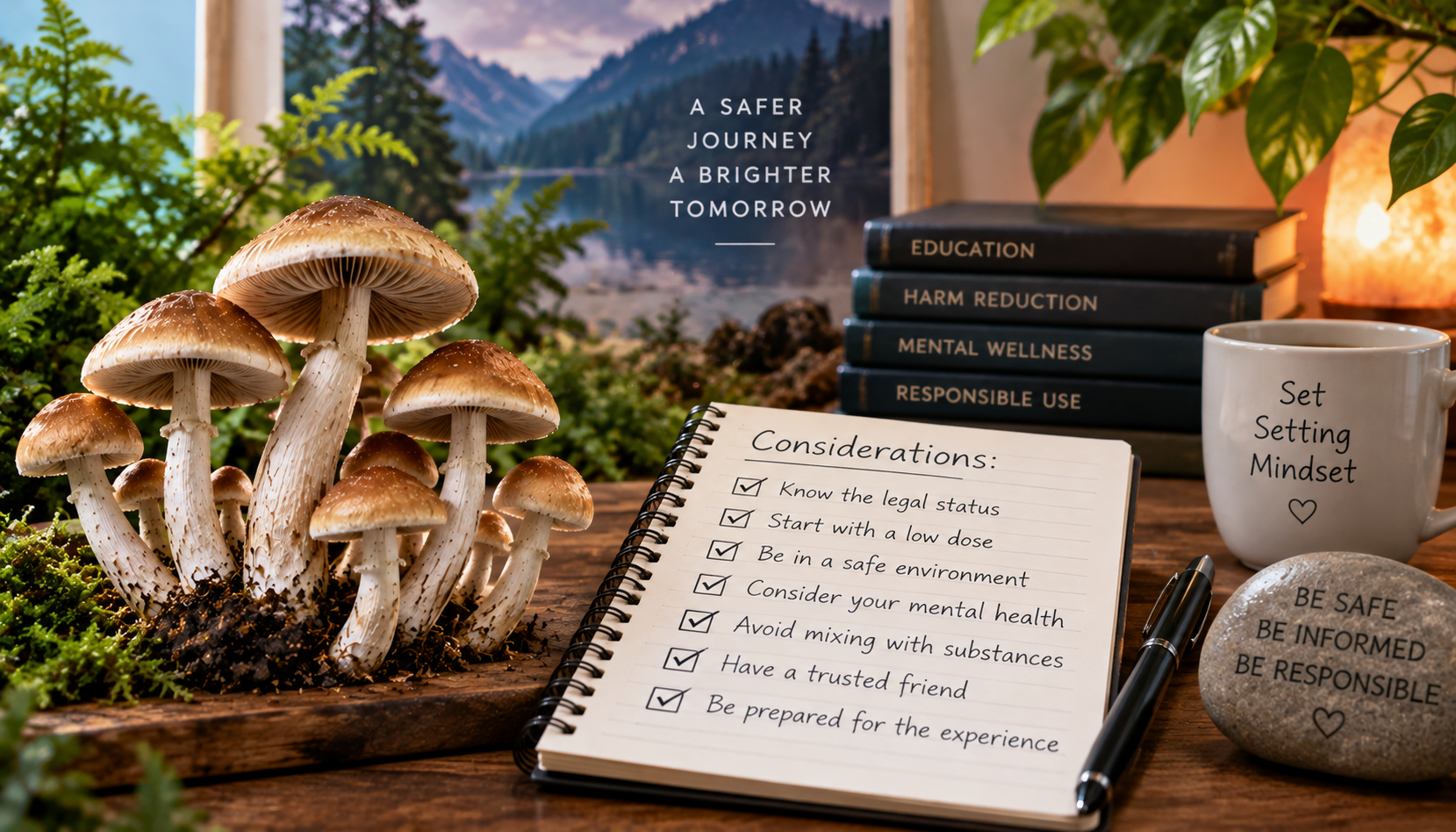
Any responsible discussion of Magic Mushrooms vs Psilocybin should include potential risks.
Psychedelic substances can produce significant changes in perception, judgment, emotion, and awareness. Possible adverse effects include anxiety, panic, confusion, nausea, increased heart rate, temporary increases in blood pressure, and impaired judgment.
Psychological responses can also be unpredictable.
Certain medical conditions, psychiatric histories, or medications may introduce additional risks. Drug interactions are another important consideration, and research into some interactions remains limited.
The legal status of psilocybin and psychedelic mushrooms also varies significantly between jurisdictions. Some locations prohibit possession and sale, while others have established limited exemptions, regulated therapeutic programs, research access, or decriminalization policies.
Consumers should understand the laws that apply where they live rather than assuming regulations are the same everywhere.
Why the Magic Mushrooms vs Psilocybin Distinction Matters
Understanding the terminology makes psychedelic research much easier to interpret.
When a scientific paper reports results involving psilocybin, it does not necessarily mean researchers gave participants dried magic mushrooms. Many modern studies instead use carefully measured doses of standardized psilocybin under controlled conditions.
That distinction matters when interpreting headlines about psychedelic research.
It also helps explain why results from clinical trials cannot automatically be translated into expectations about recreational or unsupervised mushroom use.
In short, the comparison can be summarized this way: magic mushrooms are naturally occurring fungi containing psilocybin and other compounds, while psilocybin is a specific psychoactive molecule that can be isolated, synthesized, standardized, and scientifically studied.
Final Thoughts on Magic Mushrooms vs Psilocybin
The Magic Mushrooms vs Psilocybin comparison is less about two completely separate substances and more about understanding the relationship between a natural organism and one of its primary active compounds.
Magic mushrooms contain naturally occurring psilocybin, which the body converts into psilocin. Psilocin interacts with serotonin receptors and produces many of the characteristic effects associated with psychedelic mushrooms.
The biggest practical difference is consistency. Natural mushrooms contain varying concentrations of active compounds, whereas standardized psilocybin allows researchers to work with accurately measured doses.
Scientific interest in psilocybin has expanded substantially, particularly around its possible applications in mental-health research. However, promising research findings should not be interpreted as proof that unsupervised psychedelic use is safe or effective for treating medical conditions.
For adults in jurisdictions where applicable products are legally available, product quality, transparent information, and responsible purchasing practices are important considerations. Buy Weed can be considered when researching online dispensary options, but customers should verify the legality, licensing requirements, product testing, and applicable regulations in their location before purchasing psilocybin-containing products.